
Myalgic Encephalomyelitis (ME)
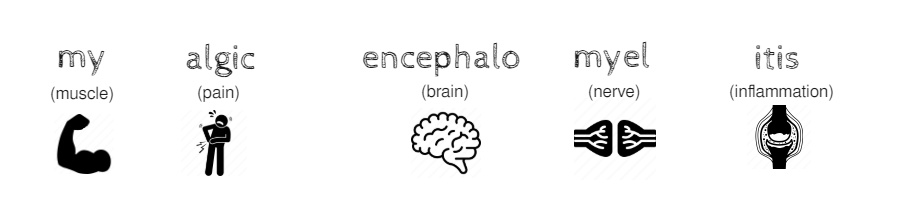
Myalgic Encephalomyelitis is also known as chronic fatigue syndrome (CFS).
Alternative names in New Zealand include: Tapanui Flu and post-viral syndrome.
- What is Myalgic Encephalomyelitis (ME)?
- Severity Spectrum
- Symptoms
- Post-Exertional Malaise / Post-Exertional Symptom Exacerbation
- Diagnosis
- Risk Factors
- Triggers
- Long COVID with ME-like features
- Multi-morbidities
- Treatment and Management
- Prevalence
- Frequently Asked Questions
- M.E. Time
What is Myalgic Encephalomyelitis (ME)?
Myalgic Encephalomyelitis (ME) is a serious, complex neurological disease that affects the body’s ability to produce and use energy (impaired cellular energy production and metabolism). It causes profound exhaustion, post‑exertional malaise, cognitive dysfunction, sleep disturbance, immune changes, and autonomic problems.
- ME is a biological illness, not psychological.
- It often begins after an infection (e.g. glandular fever or the flu).
- The body’s energy systems, immune system, neuroendocrine, and autonomic nervous system become disrupted.
- Symptoms can fluctuate day‑to‑day and hour‑to‑hour.
- It affects people of all ages, gender, ethnicities.
| Glossary Box | |
| Post-Exertional Malaise | Symptoms worsen after physical, cognitive, sensory, or emotional activity |
| Profound Exhaustion | Not relieved by rest |
| Cognitive dysfunction | Memory, concentration, and processing difficulties, “brain fog” |
| Sleep Disturbance | Unrefreshing, non-restorative sleep. |
| Dysautonomia Autonomic (nervous system) Dysfunction | Issues with heart rate, blood pressure, temperature |
| Immune Dysregulation | May under or over-react. |
The Severity Spectrum
People with ME fall along a severity spectrum, from mild to very severe. Symptoms can change over time, and many people move between levels depending on illness stability, stress, infections, or over‑exertion.
Mild ME People can usually manage daily tasks and may work or study part‑time or full‑time, but only by carefully pacing and giving up other activities. Social life, hobbies, and rest are often sacrificed to maintain essential responsibilities.
Moderate ME People are often housebound much of the time. They can do basic self‑care but need frequent rest and cannot sustain full‑time work or study. Activity outside the home is limited and may trigger crashes.
Severe ME People are mostly bedbound and need support with daily tasks. Even small amounts of physical, cognitive, or sensory activity — such as talking, sitting upright, or exposure to noise — can trigger significant deterioration.
Very Severe ME People are fully bedbound and require full‑time care. They may be unable to speak, swallow, or tolerate light, sound, touch, or movement. Even minimal sensory input can worsen symptoms.
Across all levels, the core feature is post‑exertional malaise (PEM/PESE) — a delayed crash after activity. People with ME remain capable, thoughtful, and motivated; they simply need environments and routines that match their energy limits.
What are the Symptoms?
ME has 100-200+ symptoms due to multiple body systems being impacted. The most common are: Post-Exertional Malaise, fatigue that is not alleviated by rest, “brain fog,” pain, muscle and joint aches, headaches, sleep disturbance, hypersensitivities, dysautonomia. The table below provide a short summary of common experiences caused by dysfunction of a specific body system.
| Immune | Neuroendocrine | Autonomic |
| Recurrent sore throats, flu-like symptoms, tender/swollen lymph nodes. Immune system may under-react or over-react. | Information processing and thinking difficulties, memory, and concentration issues, perceptual disturbances. Neuropathic pain. | Circadian rhythm dysfunction (exhausted during day, wide awake at night unable to sleep). Unrefreshing, non-restorative sleep. Tired but Wired states. Insomnia/Hypersomnia |
| Hypersensitivities, Intolerances (sometimes allergic or extreme reactions). Sensitive to light, sound, smells, food, chemicals, medications. Visual disturbances and eye dysfunction. | Thermostatic dysregulation (feverish but will cold extremities (hands, feet), night sweats, intolerance of heat and cold. | Orthostatic intolerance, irregular heartbeat, low blood pressure, dysautonomia (e.g. POTS, NMH, IST) – dizziness, palpitations, low blood pressure, increased heart rate or tachycardia |
Post-Exertional Malaise
Post-Exertional Malaise (PEM) is the worsening of symptoms after activity. In Long COVID with ME-like Features, PEM is known as Post-Exertional Symptom Exaceration (PESE). PEM/PESE usually occurs after a delay (12-48 hours). Activity on Tuesday can cause Thursday’s PEM/PESE ‘crash’ or episode. PEM is the defining characteristic of ME and is used as part of the diagnostic criteria to rule in ME or rule out other diagnoses.
PEM is the core feature of ME. If you are not experiencing PEM, you do not have ME.
| Activity can be anything, because everything requires energy. In ME, “activity” and “exertion” are used interchangeably — and they include not just movement, but thinking, talking, listening, making decisions, showering, sitting upright, swallowing, eating and digestion, laughing, crying, and other everyday tasks that place demand on the body’s limited energy system. |
The core treatment for PEM/PESE is pacing. Issue Two of M.E. Time features helpful pacing strategies. As an annual supporter of ANZMES you can receive a free copy. Recurring PEM/PESE episodes or ‘crashes’ can result in a permanent deterioration in your baseline energy capacity, so it is vital that you work within your energy ‘envelope’ or limit, and not exceed it. Symptom diaries or Activity Analyses can help you identify patterns, triggers, and your energy capacity.
Diagnosis
There is no single test for ME. Diagnosis is based on symptoms, history, ruling out other conditions, and identifying PEM.
Issue One of M.E. Time features advice on what to expect at a doctor’s appointment, what to say to your GP, questions to ask, ruling out other conditions with blood tests, and symptom management. As an annual supporter of ANZMES you can receive a free copy.
There are several internationally recognised criteria. All require post‑exertional malaise.
- CCC: detailed, biomedical, widely used
- ICC: most specific, emphasises neurological and immune features
- IOM/NAM (2015): simplified, used in some clinical settings
IOM/NAM (2015) Institute of Medicine
In 2015 the Institute of Medicine (now called National Academy of Medicine) release a report with proposed diagnostic criteria. This simplified criteria is now preferred by the patient community and clinicians alike.
To be diagnosed with Myalgic Encephalomyelitis using IOM (2015) the patient must be experiencing three core symptoms for more than 6 months (3 or less in children/adolescents):
- Post-Exertional Malaise
- Profound fatigue (not relieved by rest, of new onset, cannot be explained by other causes)
- Unrefreshing sleep.
And then one of two other symptoms, either:
- Cognitive impairment (brain fog, memory, concentration issues) or
- Orthostatic intolerance (lightheadedness upon standing, improves when lying down)
To learn more about diagnostic criteria you can visit our Clinicians page.
Risk Factors
ME is not caused by a single event. Current understanding suggests it develops in people with a biological predisposition or a set of risk factors that increase vulnerability to long‑term post‑viral illness. These risk factors include:
- a family history of autoimmune conditions (such as lupus or rheumatoid arthritis),
- significant childhood illnesses (including glandular fever),
- and environmental stressors or triggering events like subsequent viral infections.
Research conducted in Aotearoa New Zealand indicates that, in susceptible individuals, the immune system fails to return to a resting state after infection, leading to a chronic, self‑sustaining pathology, which can explain why the condition is long-term or lifelong. International studies also show distinct biomedical differences in immune markers between people with ME and those without the condition, reinforcing its biological basis.
Triggers
Although for the majority (~80%) of people with ME, it occurred after a viral infection, there are other known triggers, such as:
- bacterial infection
- allergic reaction to surgical anaesthesia or vaccination
- chronic or acute exposure to toxins, chemicals (e.g. fertiliser)
- physical or emotional trauma
- hormonal changes (childbirth, perimenopause)
Long COVID with ME-like Features
Long COVID is a post‑viral condition where symptoms continue or return after a COVID‑19 infection. More than 200 symptoms have been reported across multiple body systems, including fatigue, cognitive issues, pain, sleep disturbance, autonomic symptoms, and respiratory or cardiovascular changes.
A significant proportion of people experience ME‑like features, especially post‑exertional malaise (PEM) — called PESE (post‑exertional symptom exacerbation) in Long COVID. PESE and PEM describe the same phenomenon: symptoms worsen after physical, cognitive, sensory, or emotional exertion.
What this means: Management is very similar to ME. Pacing is essential. Symptoms may fluctuate. Comorbidities are common.
Recovery Window
Research suggests that many people improve within the first 18 months to 2 years, especially with careful pacing and symptom‑management. However, up to 50% may meet diagnostic criteria for ME within the first 6–12 months if PEM/PESE is present.
Early rest appears to be protective. Resting during the infectious phase and the subsequent 4–6 week recovery window may reduce the risk of developing long‑term post‑viral illness. This includes avoiding overexertion, returning to activity slowly, and respecting symptom limits.
Sub-groups of Long COVID
Long COVID is not one condition — it includes several overlapping sub‑groups:
- people with ME‑like features (PEM/PESE, autonomic symptoms, cognitive issues) who may meet the diagnostic criteria for ME
- people with post‑viral syndrome
- people with organ damage (cardiac, respiratory, neurological)
- people who became unwell after vaccination
These groups often share autonomic, immune, and metabolic features, and many experience multi‑morbidities such as dysautonomia, migraine, MCAS, hEDS, chronic pain, and gastrointestinal dysfunction.
You can read more in Issue 1 of M.E. Time, our quarterly supporter magazine. Please visit the Shop to obtain your copy of the Long COVID Information Pack.
Multi-morbidities and the “Septad”
It is important to note, that ME, rarely occurs in isolation. This means that often there are other conditions that occur alongside ME. This can make diagnosis challenging, however many of the commonly occurring conditions are treatable or manageable.
Common multi-morbidities
Many people with ME, may also experience:
- Fibromyalgia
- Migraine
- Sleep disorders
- Secondary mental health impacts (from living with a chronic illness)
The “Septad”
The “Septad” refers to a group of overlapping conditions that often co-exist with ME. According to Kaufman and Ruhoy these are:
- Dysautonomia (OI, POTS, NMH, IST)
- Mast Cell Activation Syndrome (MCAS)
- Hypermobile Ehlers-Danlos Syndromes (hEDS)/Ehlers-Danlos Syndromes
- Gastrointestinal issues (irritable bowel syndrome, gastroparesis)
- Autoimmune conditions
- Chronic viral reactivation
- Neurologic structural issues (e.g. small fibre neuropathy and craniocervical instability).
Emerging research and clinical patterns also indicate overlapping physiological mechanisms with compression syndromes, endometriosis, and neurodivergence.
Why this matters
Comorbidities can affect diagnosis, management, and symptom patterns.
Learn more in this short 5-minute video on our YouTube Channel which outlines these conditions.
Treatment and Management
There is no cure yet, but symptoms can be managed. The most important strategy is pacing to avoid PEM/PESE.
Core strategies
- Pacing — staying within your energy envelope
- Rest — proactive, not reactive
- Managing sensory overload
- Sleep support
- Pain management
- Orthostatic intolerance strategies
What to avoid
- graded exercise therapy (GET)
- pushing through symptoms
- programmes that increase activity regardless of PEM
Prevalence
Pre-Pandemic
Pre-pandemic it was estimated (based on pro rated overseas data) that there were at least 25,000 people with ME in New Zealand (2-4 per thousand). This equated to: 1 in 250 adults and 1 in 134 youth. Based on USA medical claims, this figure was closer to 45,000. More recent research, estimated ME was prevalent in 0.89% of the population, which aligns with the higher figure in NZ.
To put that in perspective, the incidence is higher than Multiple Sclerosis (~5,000), and considerably higher than a woman’s lifetime risk of developing lung cancer. ME was thought to afflict around 150,000 in the UK, and over one million in the US before the pandemic. The economic cost to each family with a person living with ME was estimated to be in the region of NZ$35-45,000 per year (as at 2017).
Post-Pandemic
Post-pandemic (as at March 2026) it is estimated that ME accounts for between that 0.89 and 1.2% of the population with some studies suggesting 2% when post-COVID cases are included. According to Open Medicine Foundation (Australia), out of the 185,000 reported by the Ministry of Health to be affected by Long COVID, in Aotearoa, 135,000 fit the diagnostic criteria for ME. This means with our existing prevalence, we potentially have 180-185,000 people with ME in Aotearoa/New Zealand (as at April 2025). This equates to 1 in 30 people living with ME or Post-COVID-induced-ME.
Other research suggests, that up to 50% of people with Long COVID meet the diagnostic criteria for ME. Using data from a Long COVID research initiative run by the US National Institutes of Health (NIH), the incidence of ME globally, is now considered 15 times higher than pre-pandemic levels, and that people with a history of COVID are almost eight times as likely to develop the chronic condition.
Want to know more? Check out our Frequently Asked Questions page.
M.E. Time
We provide detailed content in our 60-page quarterly Supporter magazine called M.E. Time.
Each issue includes:
- Expert Voices (a section written by an expert on the subject)
- Voices of ME (a section written by the community)
- Science Simplified (a summary of the latest research in layperson’s terms)
- Research Digest (A detailed evidence-informed section on the issue topic)
- Resources (practical strategies for people living with ME, LC, and associated conditions, their whānau, carers, employers/schools).
- Advocacy updates (reports from ANZMES on representation, submissions and more)
- Community Spotlight (updates from community organisations and services)
- Events (community relevant events and updates)
- Contact Directory (Support Groups & Service Providers’ contact details, and other relevant organisational contacts).
Issue 1 – What is ME and Long COVID?
Issue 2 – Post-Exertional Malaise / Post-Exertional Symptom Exacerbation
Issue 3 – Dysautonomia
Become an Annual Supporter and receive your copy for free.
Obtain past issues through our online Shop.
