World ME Day asks you to learn about the broken energy system in ME/CFS – PRESS RELEASE

PRESS RELEASE – for immediate release

World ME Day asks you to learn about the broken energy system in ME/CFS

If you’ve never heard of post-exertional malaise (PEM) you’re not alone. But for people living with ME/CFS or long Covid understanding PEM is crucial to managing their illness. World ME Day on May 12 is an opportunity to increase your understanding of this little-known phenomenon.

Post-exertional malaise (PEM) is something that everyone with ME/CFS (Myalgic Encephalomyelitis /Chronic Fatigue Syndrome)  experiences. So what is it? Put simply, PEM is a debilitating and abnormal response to normal activity.

People with ME/CFS and long COVID have what is called an energy envelope. This is the amount of energy they have on any given day to function. Research and experience shows that if a person expends an equivalent amount of energy to the amount they have available they will reduce the symptom flares they experience.

When people with ME/CFS and long COVID push to do more than their energy envelope can cope with, the severity of their symptoms increase. This period of reduced functionality and exacerbation of symptoms typically starts within 12 to 48 hours after the activity or exposure and may last for days, weeks, or may also be permanent.

When PEM hits, people report existing symptoms increase, and that new ones appear including brain fog (executive functioning), flu-like symptoms (sore throat, muscle pain, increased fatigue); muscle weakness; increased sensitivity to noise, light or touch; pain; sleep problems.

How much and what type of exertion triggers PEM is different for each person. Triggers can include:

  • physical (walking around the mall or folding the washing);
  • cognitive (thinking, talking, reading)
  • processing emotional events (both positive and negative stressors)
  • sensory overload (noise, light, touch, smell, temperature, vibrations such as in vehicles)
  • physiological processes (digestion, temperature regulation, fighting infections)
  • orthostatic (sitting or standing upright vs lying down)
  • multi-tasking (even if individually each activity is within their Energy Envelope, e.g. talking while walking, or thinking while in a noisy environment)

Leading ME/CFS researcher Dr Lynette Hodges, Exercise Physiologist, Massey University, says “Individuals with ME/CFS are not lazy or deconditioned. Our research has shown physiological changes for those with ME/CFS. Both planned exercise and even simple activities of daily living can cause PEM.”

PEM is best managed by creating an individualised routine of rest and carefully paced activities within the individual’s current energy envelope. GP Cathy Stephenson states “If there’s one thing to impress upon health providers when it comes to the management of ME/CFS, it’s Pacing. Above all else. Pacing.”

Kate was diagnosed with ME 5 years ago after 20 plus years of health challenges triggered from a viral illness. Before this she was hardly ever sick, a school prefect, and played high level sport representing New Zealand for Water Polo. In 2018 her system crashed after pushing through symptoms for too long when numerous doctors weren’t able to help. She suffered with crushing fatigue that did not improve after a full night’s sleep and had to give up work, sports and her social life. She was mostly confined to her home, except for dropping off and picking up her boy from daycare/school and other activities.

She also experienced constant body pain, fluctuating headaches, neurological problems resulting in impaired memory and an inability to concentrate and Postural Orthostatic Tachycardia Syndrome (POTS), a dysfunction in the autonomic nervous system. Any physical, mental, or emotional effort would cause worsening of her symptoms and she had to learn to work within a very small energy envelope.

Five years on, Kate has made what is known as significant progress in the ME community, with a reduction in symptoms enough that she can work a small number of hours each week. She can attend more activities with her son, however her dreams of dancing and playing masters level competitive sports are not fulfilled and she is accepting that she may never reach these and other dreams she has.

World ME Day: LearnFromME – “ME: the disease where pushing harder can make you sicker.”

Visit the World ME Day information from ANZMES on https://anzmes.org.nz/worldmeday2023/

Follow the Learn From ME page on Facebook  on May 12th to follow the World ME Day campaign. This page is a collaborative initiative between the regional and national ME/CFS organisations:

ANZMES (Associated NZ ME Societies)
Complex Chronic Illness Support
ME Support
MECFS Canterbury
MEISS Otago
ME Awareness NZ
Rest Assured Respite Trust

Find out more about ME/CFS or to take action to support World ME Day by visiting: www.worldmeday.org

ME/CFS Reclassification Petition – ANZMES set to speak to parliament

ANZMES is set to speak to parliament on May 3rd to present an oral submission to the Health Committee – an opportunity to strengthen the argument for the reclassification of ME/CFS to a disability.

Associated New Zealand Myalgic Encephalomyelitis Society (ANZMES) petition to reclassify ME/CFS as a disability was read in Parliament, on the 13th of September 2022, and has been under consideration with the Health Committee since then.

ANZMES president, Fiona Charlton, will speak to parliament on behalf of the members that she represents, along with Emeritus Professor Warren Tate and RCNZGPs Fellow Dr. Sarah Dalziel, who will answer the committee’s questions.

ME/CFS is a debilitating long term condition that affects multiple body systems and is characterised by Post Exertional Malaise, where symptoms worsen after periods of even ordinary activities. The current classification of ME/CFS as an illness rather than a disability makes it difficult for individuals who suffer from the condition to access the necessary support that they need to lead quality lives.

“We must make this chronic condition a disability now and give people fair access to the help that they need,” says Charlton.

A growing number of people with long COVID are now being diagnosed with ME/CFS, putting strain on already exhausted resources.

There is no dedicated funding for the condition and the current classification and system is difficult to navigate. There are complicated assessment processes and policies. There is disparity between regions causing access inequality.

In order to be diagnosed with ME/CFS a person must be significantly impaired in terms of functioning in daily life, such as work or school.

ANZMES has presented the government with detailed reports, research and recommendations and now hope that they will listen and take the urgent action that is needed.

Reclassification will lead to real improvements for those in need; providing access to disability support services – much needed home help, housing support, financial support, and counselling access.
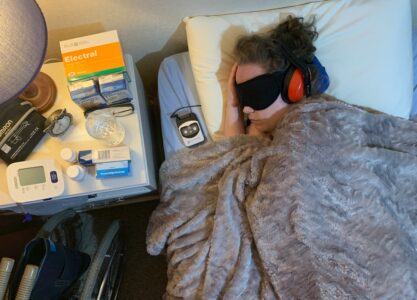

What is ME/CFS?

Myalgic Encephalomyelitis/Chronic Fatigue Syndrome (ME/CFS) is often triggered by a viral illness and involves overwhelming fatigue and other symptoms that range in severity as it affects many body systems, such as the immune, neuroendocrine and autonomic nervous system.

The key characteristic of ME/CFS is post exertional malaise (PEM) which presents 12-48 hours after exertion, and can result in days to weeks of exacerbated symptoms. For the very severe, this exertion can be simply trying to speak, or eat.

Who are ANZMES?

The Associated New Zealand Society for ME/CFS (ANZMES) have been providing information, awareness for ME/CFS, funding research, and advocating for people with ME/CFS for the past 43 years (since 1980). As the national advisory body for ME/CFS in New Zealand, ANZMES disseminates evidence-based information nationally, and represents the ME/CFS voice globally as a founding member of the World ME Alliance. ANZMES acts as the voice of all people living with this disabling disease through advocacy and leadership. ANZMES is a RNZCGP registered provider for continuing education. Health professionals can earn CME/CPD credits with ANZMES latest education programme – Know M.E. – a video podcast and news series featuring up-to-date, evidence based research and information on ME/CFS and Post COVID Conditions.


For more information contact

info@anzmes.org.nz

Podcast lecture that Dr Ros Vallings made at Dunedin meeting on 22nd September.

Dr Ros Valling’s lecture on 22nd September, 2014.

Ros2
Doctor Ros Vallings lecturing.


Thanks to Ros Vallings for coming to Dunedin and lecturing medical students. The following podcast was made for ongoing education for medical students.

Doctor Ros Vallings at the Public Meeting in Dunedin Colquoun Theatre 22 Sept, 2014.

Ros trip
Dr Vallings being introduced at the meeting.

Ros2
Dr Ros Vallings lecturing to the crowd.

Debbie
Debbie, ANZMES manager with resources ready to give out.

Doctor Ros Vallings lectured at the Colquhoun Theater in Dunedin on the 22nd September, 2014 to make a Podcast for Medical Students education at a public meeting.
Resources were given to Doctors and Medical Students who attended plus members of the public. There were over a large crowd who turned up on a cold snowy day to listen to the latest information from Ros.

ANZMES AGM 2nd November 2014

Australian Paediatrician Kathy Rowe

ANZMES AGM will be held on the 2nd November at 1pm at the CCS resource Centre in Royal Oak. Guest Speaker will be Dr Kathy Rowe a top Australian Paediatrician. After the AGM Kathy will be visiting many New Zealand main centres to lecture to paediatricians and Medical professionals.

Over the past 44 years, Kathy Rowe has achieved outstanding national and international recognition for her work in adolescent health. She is widely acclaimed as a caring, dedicated consultant physician, in the Centre for Adolescent Health at Melbourne’s Royal Children’s Hospital. She has also held academic appointments in the University of Melbourne’s Department of Paediatrics, involved in teaching, research and clinical work.

She is an expert in the area of chronic fatigue syndrome, having worked tirelessly and championed its cause when it was not fashionable. Prof Leonard Jason referred to her work as “the most elegant and important in the field” and stated that “the entire field has benefited from the precision and rigor of her methods.”She worked hard on the international committee establishing the paediatric case definition and diagnostic criteria for CFS/ME (2006).

Malcare WordPress Security