PRESS RELEASE – World ME Day, ANZMES launches new clinical “Key Red Flags” guide to help GPs recognise ME/CFS earlier and prevent avoidable harm

The Associated New Zealand Myalgic Encephalomyelitis Society (ANZMES) is marking World ME Day 2026 with a national call to action: Take ME Seriously. This year’s campaign focuses on improving early recognition of Myalgic Encephalomyelitis/Chronic Fatigue Syndrome (ME/CFS) in primary care through a new, evidence‑based Key Red Flags for GPs resource.

Thousands of New Zealanders live with ME/CFS — a serious, multisystem neuroimmune disease that profoundly affects mobility, cognition, autonomic function, and quality of life. Yet many remain undiagnosed or misdiagnosed for years, leading to preventable deterioration.

ANZMES President Fiona Charlton says the new clinical tool is designed to meet GPs where they are: “Most people with ME/CFS present first — and often only — in primary care. Early recognition is the difference between stabilisation and long‑term disability. Our Key Red Flags guide gives GPs the practical, real‑world indicators they need to identify ME/CFS early, recognise deterioration, and prevent iatrogenic harm.”


A practical, GP‑friendly tool for early detection

The Key Red Flags for GPs document distils the latest international evidence into a concise, one‑page clinical guide. It highlights the most important “dashboard lights” that signal ME/CFS in mild to moderate presentations — the group most commonly seen in general practice.

The resource focuses on:

  • Post‑Exertional Malaise (PEM) — the cardinal symptom of ME/CFS and the strongest diagnostic indicator.
  • Boom–bust cycling and shrinking functional capacity.
  • Orthostatic intolerance (OI) and POTS‑like symptoms, often mistaken for anxiety.
  • Talk Test failure — a simple in‑consult indicator of exertional intolerance.
  • Cognitive overload and sensory hypersensitivity, frequently subtle but clinically significant.
  • Early functional decline, which is preventable with timely pacing and stabilisation.

The guide also outlines immediate GP actions, including pacing education, orthostatic vitals, low‑stimulus consultations, and avoiding harmful recommendations such as graded exercise or “pushing through.”


A national call for safer, evidence‑based care

ANZMES’ 2026 campaign builds on its ongoing advocacy for improved recognition, updated clinical pathways, and alignment with global best practice. Previous ANZMES statements have highlighted the consequences of outdated treatment protocols, under‑recognition, and lack of specialist services in New Zealand.

“New Zealanders with ME/CFS deserve care that reflects the science,” Charlton says. “This resource is a step toward ensuring every GP in Aotearoa can recognise ME/CFS early, respond safely, and prevent avoidable decline.”


About World ME Day

World ME Day is a global initiative held annually on 12 May to raise awareness of ME/CFS and promote evidence‑based understanding of the disease. This year’s theme, Take ME Seriously, calls on clinicians, policymakers, and the public to recognise ME/CFS as the serious biomedical condition it is.


Access the Key Red Flags resource

The Key Red Flags for GPs document and full World ME Day 2026 campaign materials are available at:
anzmes.org.nz/world-me-day/take-me-seriously-2026

GPs at Frontline for Early Recognition

DecodeME Study explained

Every day in clinics across Aotearoa, general practitioners are the first — and often only — clinicians to see the early signs of Myalgic Encephalomyelitis/Chronic Fatigue Syndrome (ME/CFS). With recent Ministry of Health/Manatū Hauora and Open Medicine Foundation estimates suggesting that up to 185,000 New Zealanders may now be living with ME/CFS or Long COVID with ME‑like features, the scale of need is rapidly increasing. Most will present first to primary care. That places GPs in a uniquely powerful position: early recognition and early intervention can change the trajectory of this disease.

Why World ME Day Matters for Primary Care

World ME Day (12 May) highlights the importance of early recognition and harm‑prevention in general practice. ME/CFS is not rare, benign, or self‑limiting. It is a serious, multisystem neuroimmune disease that can lead to profound disability. Yet many patients remain undiagnosed for years — not because symptoms are invisible, but because they are misunderstood.

GPs can change that. Early recognition prevents harm, reduces deterioration, and helps patients stabilise before they fall into severe disease.


The DecodeME Study: What GPs Need to Know

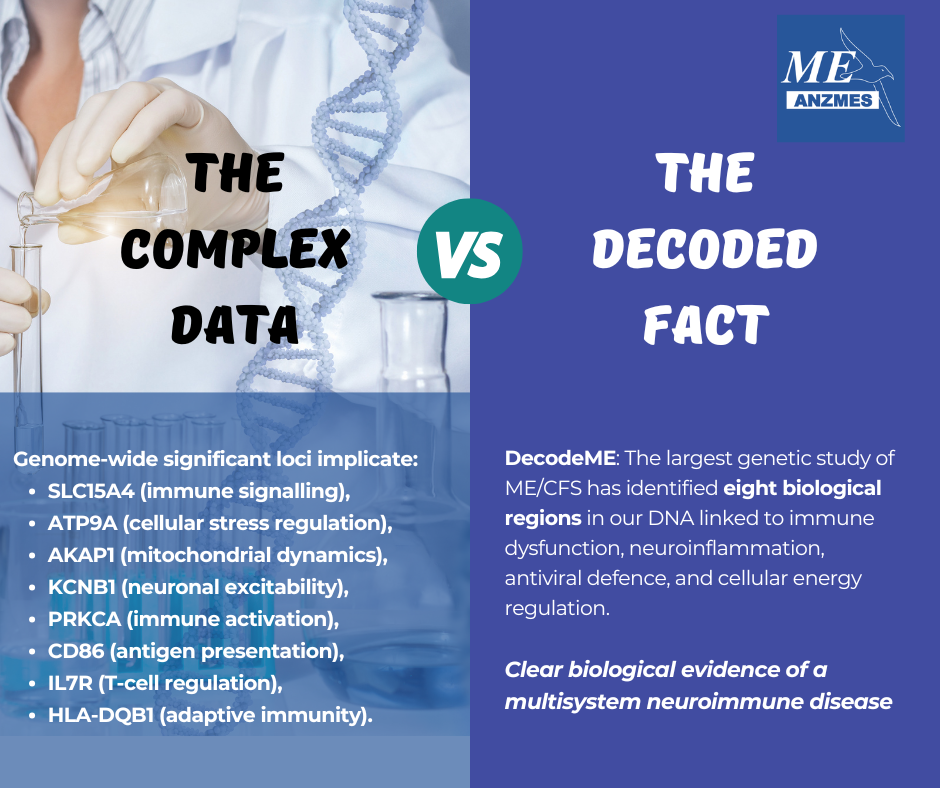
DecodeME is the largest genetic study of ME/CFS ever conducted, analysing the DNA of 15,579 people with ME/CFS and 259,909 controls. DecodeME looked at genetic variants in DNA sequence — the fixed letters of the genome. These do not change because someone becomes ill. Chronic illness can change gene expression, but it cannot change gene sequence. The findings provide clear biological evidence of a multisystem disease involving immune signalling, neuroinflammation, mitochondrial function, and antiviral defence.

What DecodeME Found — in Plain Language

Researchers identified eight genomic regions where people with ME/CFS differ from those without the illness. These regions include genes involved in:

  • Immune system regulation (SLC15A4, PRKCA, CD86, IL7R, HLA‑DQB1)
  • Mitochondrial (cell powerhouse) dynamics and cellular energy regulation (AKAP1, ATP9A)
  • Neuronal excitability and sensory processing (KCNB1)

In simple terms, these genes influence how the immune system switches on and off, how cells produce and manage energy, and how the nervous system processes signals.

DecodeME’s findings align with decades of biomedical research showing:

  • Immune dysregulation
  • Neuroinflammation
  • Autonomic dysfunction
  • Mitochondrial impairment
  • Abnormal sensory processing

These results directly contradict outdated, flawed theories suggesting ME/CFS is caused by psychological factors, deconditioning, or maladaptive beliefs. The genetic signals identified in DecodeME are differences in DNA sequence — fixed from birth and not altered or caused by chronic illness, lifestyle, stress, or personality. This means the study isnot ‘capturing a symptom’; it is identifying biological predispositions (the underlying in-build tendencies in the body) that you are born with. These differences help explain why some people develop ME/CFS after a trigger such as a viral infection or other environmental stressor — their immune and neurological systems respond differently when challenged.

DecodeME reinforces what patients and clinicians have long observed: ME/CFS is a real, physical, biological disease.


The Cardinal Feature: Post‑Exertional Malaise

The most important diagnostic anchor remains Post‑Exertional Malaise (PEM) — the delayed, disproportionate worsening of symptoms after physical, cognitive, emotional, or orthostatic exertion.

If a patient does not have PEM, they do not have ME/CFS.

PEM is not “tiredness after activity”; it is a pathological crash that can last days or weeks. Patients often describe it as:

  • “I can do things, but I pay for it later.”
  • “I can’t bounce back.”
  • “My body shuts down after I do things.”

Recognising PEM early allows GPs to guide patients toward safe activity management and avoid interventions that risk deterioration.


🚩Red Flags for GPs — When ME/CFS Should Be on Your Radar

GPs often see the earliest clues:

  • A viral or infectious trigger followed by persistent decline
  • Marked symptom worsening after even mild exertion
  • Crashes occurring 12–48 hours after activity
  • Cognitive overload or sensory intolerance
  • Orthostatic symptoms such as dizziness or tachycardia
  • Boom‑and‑bust cycling
  • Failure to recover to baseline after exertion

These are the patients who need careful pacing guidance, harm‑prevention strategies, and monitoring for deterioration.


Why Early Intervention Matters

Early recognition allows GPs to:

  • Prevent PEM episodes through pacing and activity stabilisation
  • Avoid harmful graded exercise or “return to normal” plans
  • Identify and manage orthostatic intolerance
  • Document functional decline early for workplace/school support
  • Prevent severity progression (mild ⇢ moderate ⇢ severe ⇢ very severe)
  • Validate a very real and debilitating disease

The GP’s response in the first months of illness often determines whether a patient stabilises or deteriorates.


Where GPs Can Access the Full Clinical Toolkit

Visit the ANZMES World ME Day page for diagnostic criteria, PEM recognition tools, management principles, pacing guidance, and access to the World ME Alliance medical education hub.

The World ME Day Red Flags Guide focuses on early recognition and harm‑prevention.

The Know M.E. Clinical Education Programme (CME/CPD accredited) provides practical in‑clinic tools, early stabilisation strategies, and multimorbidity identification. GPs can begin immediately through the Micro‑Learning Series, delivered straight to their inbox.

Closing Message

With increasing prevalence ME/CFS is a major public health issue — and one that sits squarely in the domain of primary care. This World ME Day, ANZMES invites GPs to explore the red flags, deepen clinical understanding, and join the movement to #TakeMESeriously.

Access the GP Red Flags Guide and full clinical resources at:
https://anzmes.org.nz/world-me-day/take-me-seriously-2026/

Press Release – ANZMES Launches National “Take ME Seriously” Campaign to Transform ME/CFS Clinical Care in Aotearoa

Release Date: 5th May 2026

The Associated New Zealand Myalgic Encephalomyelitis Society (ANZMES) is officially marking World ME Day on 12 May 2026 with a national call to action under the global theme “Take ME Seriously”. This year’s campaign is focused on bridging the significant gap between scientific discovery and clinical practice by providing New Zealand’s healthcare professionals with the evidence-based tools they need to recognise and manage Myalgic Encephalomyelitis/Chronic Fatigue Syndrome (ME/CFS) safely. With the recent release of breakthrough findings from the world’s largest DNA study, DecodeME, the biomedical reality of this condition is undeniable, yet many New Zealanders continue to face outdated treatment narratives that can lead to permanent clinical harm.

Leading up to World ME Day, ANZMES will launch new clinical resources and have conversations designed to help General Practitioners identify early warning signs such as Post-Exertional Malaise (PEM) and orthostatic intolerance. These resources are part of a wider push to promote the World ME Alliance’s Medical Education Hub, a global library of peer-reviewed materials that align local primary care with international best practices. ANZMES President Fiona Charlton emphasises that for too long, ME/CFS has been misidentified as a psychological or deconditioning issue, whereas the current science confirms it as a multisystem hardware failure involving immune dysregulation and mitochondrial dysfunction.

The campaign also highlights the “Know M.E. Clinical Education Programme,” a CME/CPD-accredited training series for hospital teams, nurses, and allied health professionals across Aotearoa. By providing these accredited modules, ANZMES is helping clinicians understand the “Energy Envelope” and the fundamental necessity of pacing as a primary management strategy. Distinguished experts, including Dr. Ros Vallings and Professor Warren Tate, have contributed to this educational push, underscoring that when clinicians are trained to understand the biological markers of the disease, the healthcare system moves from a state of uncertainty to preventing avoidable functional decline.

For the thousands of New Zealanders still waiting for a legitimate diagnosis, the 2026 campaign offers a message of hope and a formalised pathway to support. ANZMES is encouraging the public and the medical community to share these “decoded” facts to spread the science and challenge long-standing misconceptions that have historically hindered patient care. 

We ask that you please support and follow our 2026 campaign on ANZMES Facebook. over the next week. Sharing our content helps spread our message further and reach our health practitioners across Aotearoa. 

Detailed clinical resources, diagnostic criteria, and localised referral pathways are now available on the ANZMES website to ensure that every healthcare provider in Aotearoa is equipped to take ME seriously: World ME Day 2026 – ANZMES 

Press Release – ANZMES Launches M.E. Time — A Fresh, Evidence‑Informed Quarterly Magazine for the ME/CFS Community

March 2026 – ANZMES is proud to announce the launch of M.E. Time, our newly refreshed quarterly magazine designed to inform, empower, and connect people living with ME/CFS, Long COVID, and associated conditions across Aotearoa New Zealand.

Created fully in‑house for the first time, M.E. Time brings together evidence‑based research, lived experience, expert commentary, sector updates, and practical resources — all in a beautifully curated, easy‑to-read format. As President Fiona Charlton writes in her opening message:

“To gain control over the look, feel, and content, we are now producing the magazine in-house… Your feedback played a large part in the revitalisation of the magazine and we hope you will love it as much as we do!”

This refreshed publication replaces Meeting Place and marks a new chapter in how ANZMES communicates with and advocates for our community.

A Magazine for Everyone — Now Available to Non‑Members

For the first time, M.E. Time is available not only to ANZMES members but also to the wider public.

Members continue to receive the magazine free of charge, while non‑members can now purchase individual issues through our online shop.

This ensures the publication meets ISSN requirements for public availability — and allows anyone interested in ME/CFS, Long COVID, or post‑viral illness to access high‑quality, evidence‑informed content.

What’s Inside Issue 1

The inaugural issue is rich with content spanning research, advocacy, lived experience, and practical support. Highlights include:

✔ Expert Voices

Featuring insights from Dr Ros Vallings and Professor Warren Tate, who discuss the biological basis of ME/CFS and the overlap with Long COVID:

“There are clear signs of immune dysfunction, inflammation, and metabolic disturbances…”

✔ Lived Experience

Deeply personal stories from people navigating ME/CFS and Long COVID — including reflections on pacing, disability, and resilience.

✔ Research Digest

Easy‑read summaries of cutting‑edge biomedical research, including genetics, immune dysfunction, mitochondrial science, and post‑viral mechanisms.

✔ Advocacy Updates

A roundup of ANZMES’ recent submissions and policy work, including protecting carers, safeguarding youth on Job Seeker Support, and ensuring ME/CFS expertise is embedded in Long COVID care pathways.

✔ Community News & Spotlight

Sector collaborations, media coverage, and a feature on ME Respite’s practical support services.

✔ Resources & Events

Patient guides, carer resources, support group listings, and details for the 2026 Writing & Poetry Competition.

Why This Matters

M.E. Time is more than a magazine — it’s a platform for connection, education, and empowerment. It reflects ANZMES’ commitment to:

  • Evidence‑based information
  • Community voice
  • Sector leadership
  • Accessible, compassionate communication

Get Your Copy

  • Members: Your free digital copy is available now.
  • Non‑members: Purchase Issue 1 for $5.00 via the ANZMES online shop.

Whether you’re living with ME/CFS or Long COVID, supporting someone who is, or working in healthcare, M.E. Time offers a thoughtful, evidence‑informed companion for your journey.

New ANZMES Long COVID Patient Information Pack Now Available

ANZMES is pleased to announce the release of our comprehensive Post‑COVID‑19 Condition (Long COVID) Patient Information Pack, now available digitally through our online shop. This evidence‑based, patient‑centred resource has been created to support people who are newly diagnosed, awaiting diagnosis, or struggling to understand the complex and often confusing landscape of Long COVID.

Drawing on the latest international research and clinical consensus, the pack explains Long COVID as a multi‑system, post‑viral condition with strong overlaps with ME/CFS — including shared biological features, symptom patterns, and the central importance of pacing and rest‑based management. It is designed to demystify the condition and empower patients with clear, practical guidance they can use immediately.

What’s Inside the Pack

🧭 A clear explanation of Long COVID
Including how it is defined by the WHO and Health NZ, why symptoms persist, and how it relates to ME/CFS and other post‑viral syndromes.

🧬 The science behind the illness
An accessible overview of current biomedical findings, including immune dysregulation, mitochondrial dysfunction, autonomic instability, and why Long COVID is not simply deconditioning.

🩺 Diagnosis: what to expect
A step‑by‑step guide to the diagnostic process, symptom clusters, and the importance of ruling out other conditions. Includes practical symptom‑tracking tools and questions to take to appointments.

🌪️ Understanding the “Septad” of common coexisting conditions
A detailed explanation of the seven frequently overlapping conditions seen in Long COVID and ME/CFS, and why managing them holistically is essential.

Pacing and energy management
A full introduction to pacing, baseline setting, and avoiding Post‑Exertional Symptom Exacerbation (PESE/PEM), with guidance on cognitive, emotional, and physical exertion.

🌬️ Breathing and respiratory support
Practical techniques such as the Bradcliff Breathing Method, “Stop, Drop, Flop,” and rectangle breathing to help manage air hunger and dysfunctional breathing patterns.

🧂 Managing dysautonomia and POTS
A breakdown of the new global consensus on autonomic disorders, including the three‑tier management approach, questions for your cardiologist, and non‑pharmacological strategies like compression and volume expansion.

🍎 Nutrition, hydration, sleep, and stress management
Evidence‑informed lifestyle strategies, including low‑histamine options for MCAS, sleep hygiene tips, and approaches to managing sensory sensitivities and stress‑related symptom flares.

🤝 Support networks and further resources
Links to ANZMES education programmes, clinical resources, and regional support groups across Aotearoa.


How to Access the Pack

The Long COVID Patient Information Pack is available now:

  • $2.50 for ANZMES members (digital)
  • $5.00 for non‑members (digital)
  • Printed copies available for the above prices plus the cost of postage and packaging.

This resource has been created to give patients clarity, validation, and practical tools at a time when many feel overwhelmed or unsupported. It also serves as a valuable reference for whānau, carers, and health professionals seeking to better understand this complex condition.


Additional Resources for Primary Care

For clinicians wanting further guidance, ANZMES also offers a free Primary Care Long COVID Resource released in 2023, available at:
https://anzmes.org.nz/anzmes-release-resources-for-primary-care/

And this month, Victoria University of Wellington has released a concise, practical one‑page Long COVID guide for primary health care, offering another helpful tool for busy practitioners.

Press Release – World ME Alliance Launches Medical Education Hub Featuring Key ANZMES Clinical Resources

For Immediate release – 28/10/2025

The Associated New Zealand ME Society (ANZMES) is proud to announce that its key clinical resources are featured on the new Medical Education Hub, launched in the last week by the World ME Alliance (WMEA). The WMEA is a global coalition of ME organisations working to improve understanding, diagnosis, and care for people with ME/CFS worldwide.

The hub is a dedicated online resource designed to equip healthcare professionals globally with essential knowledge about ME/CFS. This initial launch is a pilot version, which the WMEA plans to build upon and improve over time, particularly regarding accessibility and language options.

The hub provides a comprehensive library, featuring resources in multiple languages and organised by key categories for healthcare professionals. ANZMES is proud to have its vital resources for Primary Care in ME/CFS and long COVID and Secondary Care for Severe ME/CFS and long COVID featured alongside materials from other internationally renowned sources, including the Bateman Horne Center, CDC, Mayo Clinic, and NICE; setting a clear benchmark for evidence-based guidance.

Collectively, the guidelines and resources on the hub directly address critical gaps in medical education for both primary and secondary care settings. This empowers clinicians worldwide to provide better, more informed care for individuals living with ME/CFS and long COVID.

The Medical Education Hub is now live and accessible to the public and healthcare professionals. The WMEA is actively seeking user feedback to guide future developments.

View the new hub at: worldmealliance.org/medical-education-hub 

Press Release – Grant Scholarship Winners 2025

For Immediate release – 14/10/2025

ANZMES, Aotearoa’s National Advisory on Myalgic Encephalomyelitis/Chronic Fatigue Syndrome (ME/CFS), is proud to announce the two recipients of our 2025 Grants & Scholarships Programme. Marking the third consecutive year of this vital initiative, the programme continues its dedicated support for groundbreaking research into ME/CFS and the overlapping challenges of Long COVID within New Zealand. 

ANZMES is delighted to confirm that Dr. Natalia Boven of the COMPASS Research Centre at the University of Auckland has been awarded a $25,000 Grant as part of the 2025 funding round. This Grant will contribute towards the costs of her project, titled “Identifying child and adolescent predictors of adult ME/CFS and Long COVID,” which will use linked administrative data to explore the association between childhood health conditions – particularly those linked to dysfunctional mast cell activation (MCAS) – and the risk of developing ME/CFS and Long COVID in early adulthood. The research team at the University of Auckland includes Dr. Anna Brooks, Keith McLeod, Dr. Nick Bowden (a 2023 ANZMES grant recipient), Dr. Lisa Underwood, Dr. Nicola Gillies, and Dr. David Musson. This crucial study is intended to help reduce diagnostic delays, inform risk mitigation strategies, and contribute to understanding underlying pathophysiology.

Natalia Boven, the 2025 Grant recipient, states: “We are excited to have been awarded a research grant from ANZMES to allow us to pursue our research into ME/CFS and Long COVID.” We hope this research will help identify individuals at greater risk of developing ME/CFS and Long COVID, reduce diagnostic delays, and contribute to understanding of underlying pathophysiology. We are really grateful to ANZMES for funding this research.”

ANZMES is also pleased to announce Galina Mandich of the University of Otago as the recipient of a $10,000 research scholarship. The funding will support a 10-week summer research project, providing a $7,000 internship stipend and $3,000 for research materials and expenses. The study is titled: “Development of a genetic susceptibility test for developing Myalgic Encephalomyelitis/Chronic Fatigue Syndrome and Long COVID: Has the large 2025 Decode ME GWAS study provided a key advance?”.  The study, conducted alongside Emeritus Professor Warren Tate and Katie Peppercorn, will analyse blood samples in families where multiple members are impacted by ME/CFS and Long COVID. The aim is to identify common genetic markers or a ‘signature’ shared between them. This signature could be a significant step towards earlier diagnosis, treatment, and improved outcomes for those impacted by these debilitating conditions. 

Galina Mandich, the 2025 Scholarship recipient, states: “It can eventually provide healthcare practitioners with an important tool to support individuals with earlier intervention and care, alongside ongoing education to raise awareness and understanding. It is a privilege to continue learning about ME/CFS/LC, and I am very grateful to ANZMES for this wonderful opportunity. As a future clinician, it is my hope that this experience will provide invaluable knowledge for me to be able to provide clinical guidance and understanding towards patients with ME/CFS/LC and their families.”

Fiona Charlton, President concludes “We are pleased to offer substantial support for researchers dedicated to advancing our understanding of ME/CFS. This is only made possible by the support of our members so we’d like to give a special Thank You to them.” 

Press release – ANZMES publishes critical guide to help doctors navigate ME/CFS research and avoid harmful treatments

7th October 2025 – For immediate release

ANZMES, the leading National Advisory on Myalgic Encephalomyelitis/Chronic Fatigue Syndrome (ME/CFS), has published a new resource for healthcare professionals, “A Guide to Navigating Research: Discerning Robust vs. Flawed Science.” This essential article, released in conjunction with a one-page toolkit, is designed to combat a history of misinformation that has led to inadequate care and often harmful treatments for ME/CFS patients.

“Our goal is to arm doctors with the tools they need to critically evaluate health claims and research,” said Fiona Charlton, President of ANZMES. “By highlighting the difference between evidence-based medicine and flawed science, we can help prevent the cycle of misunderstanding and ensure patients receive care that is grounded in a true understanding of ME/CFS as a complex, biological disease.”

The new guide outlines key principles of quality research, including validity, reliability, and the crucial role of replication. It also provides a checklist for healthcare professionals to scrutinize a study’s source, methodology, and conclusions. The toolkit emphasises the importance of avoiding common research biases, such as confirmation bias and multiple testing bias, and advocates for the use of proper diagnostic criteria for ME/CFS research.

To help doctors quickly assess the quality of a study, ANZMES has identified key “red flags” and “green flags.”

Red flags of flawed science include studies with a conflict of interest (eg. funded by a for-profit entity), a lack of ethical oversight, or poor methodology such as the absence of a control group or a high drop-out rate. Research that relies on vague data, shows confirmation bias, and overstates conclusions not supported by the evidence should be viewed with skepticism.

Green flags of robust science signal a study that is transparent about its funding, has undergone a formal ethical review, and uses rigorous methodology, including the use of precise diagnostic criteria. Good research also integrates objective data, acknowledges its limitations, and is published in a peer-reviewed journal. The most trustworthy research is one whose findings have been replicated by independent research teams.

ANZMES urges healthcare professionals to embrace shared decision-making, where well-informed patients and their lived experiences are central to the treatment plan. This collaborative approach is vital for building trust and ensuring the management plan respects the unique needs of individuals with this historically misunderstood condition.

Access full article and one-page toolkit here:

A Guide to Navigating Research

Discerning Robust vs. Flawed Science

In today’s age, we’re constantly bombarded with persuasive headlines promoting a flood of health claims, miracle cures, and the latest research. For patients and healthcare professionals alike, it can be challenging to distinguish between robust, meaningful science, and flawed studies, or even information, that can be misleading or even harmful.

A pivotal moment that reshaped the understanding and treatment of ME/CFS to this day, was when two psychiatrists published an influential opinion piece in 1970. This piece centred on the 1955 Royal Free Hospital outbreak, which had initially been classified as a viral epidemic. The psychiatrists, noting that the illness disproportionately affected female nurses rather than male doctors, argued that the outbreak was not a viral event but rather a case of “mass hysteria.” Crucially, a very tactical, tiny footnote was overlooked and revealed that they had no evidence to back this claim. Despite this, their unsubstantiated opinion initiated a psychological narrative for ME/CFS, fundamentally altering its course. This marked a significant and detrimental shift from the World Health Organisation’s previous classification of ME as a neurological disease, paving the way for flawed theories like “deconditioning” and “illness behavior.” The impact of this single piece of writing, which was NOT even research, was profound, setting the stage for years of misunderstanding and inadequate care for the ME/CFS community. 

These theories led to designated treatments like Cognitive Behavioral Therapy (CBT) and Graded Exercise Therapy (GET), which have since been shown to cause harm to many patients, as evidenced in the recent report Treat ME (July 2025) by the Open Medicine Foundation of responses from 4000 ME/CFS patients1.

This article, written by ANZMES, the leading National Advisory on ME/CFS, offers the guidance and tools you need to critically evaluate health information, empowering you to make informed decisions based on evidence, NOT headlines.

1 TREATME: the Open Medicine Foundation’s Mammoth ME/CFS and Long COVID Treatment Survey Results – Health Rising

🔑Understanding the Language of Research

Before we can analyse a study, we need to understand the basic principles that underpin quality research. These terms are crucial for gauging the trustworthiness of a study’s findings.

Key Terms:

  • Validity: This refers to the accuracy of a study’s findings. Does it actually measure what it claims to be measuring? For example, a study claiming a therapy, treatment, or drug improves “quality of life” must use methods that genuinely capture that complex concept, rather than just measuring something simpler, like the ability to walk a certain distance. A study that lacks validity produces misleading results. 
  • Reliability: This is about consistency. If the same study were repeated, would it produce similar results? A reliable study uses methods that are consistent and repeatable, ensuring the findings are not just a one-off fluke.
  • Generalisability: This is the extent to which the findings of a study can be applied to a wider population. For example, a study on long COVID only includes participants under 30, its findings may not be generalisable to the entire long COVID population, which includes all ages. A critical factor for generalisability is the Central Limit Theorem (CLT). As a general rule in statistics, a sample size of more than 30 is often considered sufficient to assume that the sampling distribution is approximately normal, allowing for the generalisation of findings to the broader population. Conversely, sample sizes smaller than 30 are typically not considered robustly generalisable based on this principle.
  • Replication: The act of re-conducting an entire study, often by different researchers, to see if the original findings can be reproduced. Although single studies can seem promising, replication is pivotal to strengthen the hypothesis. If a study can’t be replicated when the same methodology is used, it may indicate that the original study was flawed in some way.  However, when results from studies using different scientific methods support each other, this strengthens the evidence base, increasing validity, generalisability and the potential for funding. 
  • A Bonferroni correction is a way of making the test for significance much stricter to account for the large number of tests being performed. If you run hundreds of statistical tests, your chance of getting a “significant” result by a random fluke is very high. This correction raises the bar for what counts as a discovery, helping to ensure that a finding is truly meaningful and not just a random statistical blip. Studies that test many hypotheses without these corrections may report false positives. 

❓Questions to Ask of Any Study

Critical analysis isn’t about simply criticising; it’s about conducting a deep, systematic evaluation. Use this checklist to scrutinise the research you encounter.

1. Scrutinise the Source and Motive

Every study is influenced by a reason and a source of funding. It’s crucial to determine any potential motives and biases.

  • Who conducted the study and who funded it? Look at the authors’ qualifications and professional affiliations. Are they recognised experts in the field? More importantly, was the study funded by an organisation that stands to profit from a particular outcome? It’s important to distinguish the type of funder. Unlike commercial entities that may profit from a certain finding, patient advocacy organisations (like ANZMES) fund research with the primary motive of patient welfare, not profit. Most importantly, these grants mandate researcher independence, meaning the funder has no influence over the study’s results or publication. Whereas, some individuals may publish studies on a technique that they have commercial interest in – creating not only a conflict of interest, but raising questions about their motives and therefore the conclusions drawn in the study.
  • What was the underlying reason for the research? Is the study attempting to answer a genuine scientific question, or could its primary purpose be to generate income, lobby for a specific viewpoint, or persuade a group towards a certain belief system? We need to determine the motive and bias that may be present in the research undertaken. It is concerning when flawed studies are shared amongst healthcare circles via their platforms which can mislead professionals into recommending a therapy to patients without knowing the full risks.

2. Examine the Methodology

The quality of a study is fundamentally tied to how it was conducted. Some research may not benefit from a rigid, “one-size-fits-all” process. A truly evidence-based approach relies on a collective set of scientific principles, not just a “box-ticking” exercise. This requires flexibility and creativity, especially when the patient and their unique experience are central to the research. 

  • How was the data collected? Was it through objective, science-based measurements, or subjective methods like self-completed questionnaires and interviews? In complex conditions like ME/CFS, self-reported data is essential to capture the lived experience of core symptoms like pain, fatigue, and cognitive dysfunction. However, robust research strengthens this subjective data by using validated and standardised questionnaires, like the SF-36 (a 36-question health survey that doctors and researchers use to get a snapshot of your overall well-being and quality of life) or the more specific ME/CFS Fatigue Types Questionnaire. These tools are specifically designed to be reliable and consistent, and a high-quality study will often cross-reference patient reports with objective markers where possible to ensure the findings are valid.

For understanding complex conditions like ME/CFS, a precision medicine approach is essential, as it moves beyond a one-size-fits-all model. The “deep dive” approach, exemplified by cases like the JenX recovery story after 18 years of severe ME/CFS, offers invaluable insights by focusing intensely on an individual’s condition, history, and experiences2. These “deep-dive” studies on small, carefully selected patient groups can reveal significant findings in specific subgroups that might be overlooked in large-scale research. By focusing on individual patient nuances rather than broad generalisations, this method allows for a more personal and profound understanding of the illness’s complexities, which is often lost when dealing with large, one-dimensional datasets, often seen in fields like cancer studies.

  • Who were the participants? How large was the sample size? Were they selected in a way that represents a good cross-section of the group being studied? It is important to distinguish this from some vital ME/CFS research that intentionally uses a small sample size for a highly-individualised ‘deep dive’. Given the complexity of ME/CFS, these studies are often necessary to explore specific mechanisms, like unique biomarker profiles etc. The key feature of high-quality research in this area is that the authors will explicitly state the study’s limitations eg. weaknesses, constraints, or boundaries of a study. For example, the findings may only apply to a specific patient subtype—and will not generalise them to the entire ME/CFS population. The danger arises when these detailed but narrow findings are overstated or used to promote a universal treatment or cause.
  • Was the response rate sufficient? It is vital to know how many people started a study versus how many completed it. If a study begins with 20 participants but only reports on the 12 who finished, it has a 40% drop-out rate. This is a significant flaw that can create a falsely positive picture.
  • Was there a control group? Without a control group for comparison, it’s impossible to know if an intervention caused the outcome or if participants would have improved anyway. For example, if noted a participants’ illness duration was less than a year, it’s possible these participants could have already been on a recovery pathway. It’s also important to include a group of participants with a longer duration of illness otherwise this weakens any causal conclusions.

2 From Severe ME/CFS to Healed: Jen’s Remarkable Rinvoq ME/CFS Recovery Story – Health Rising

3. Evaluate the Data and Conclusions

The final step is to check if the claims stand up to scrutiny.

  • Does the data back up the claims? Read past the headline and abstract. Do the results presented in the study actually support the strong conclusions being made, or are the findings overstated? To do this, look for a few key statistical concepts:

Understanding the p-value and Statistical Significance: 

  • One of the trickiest but most important numbers in a research paper is the p-value. It refers to the significance of the results, representing the probability or the confidence we can have in the hypotheses. Its job is to help us decide if a finding is a genuine effect or just a random fluke. 
  • The easiest way to understand it is to think of a courtroom trial. For example, in a trial, the starting assumption is that the defendant is “innocent until proven guilty.” In research, the starting assumption is called the null hypothesis—it assumes the treatment or intervention has no effect. The prosecutor then presents evidence to challenge the defendant’s innocence. The p-value is like a statistical summary of that evidence. 
  • A small p-value means the evidence is very surprising and unlikely to have occurred by chance. In science, a p-value greater than 0.05 means we accept the null hypothesis (no effect) and below 0.05 means we can reject the null hypothesis. Because this is so unlikely, researchers reject the “no effect” assumption and declare the finding statistically significant.
  • Statistical significance helps assess whether the results of a study are likely genuine rather than caused by random chance. When a result is deemed statistically significant, it suggests there’s a high probability that the observed effect is due to the treatment. Researchers usually establish a significance threshold in advance—commonly a p-value of 0.05—to determine the level of evidence required to consider the result valid.
  • Was the research peer-reviewed? Reputable scientific research is published in journals that use a peer-review process. This means independent experts in the subject area have evaluated the study for quality and validity before it was published, acting as a critical filter.

However, the peer-review process is not infallible and can be subject to human error or reviewer bias. Therefore, even after a study is published in a reputable journal, it is wise to be discerning. Look for post-publication commentary, such as “rapid responses” in the ‘Responses’ tab of the article where other experts and groups may critique or strongly argue the study’s methods, findings, or conclusions. 

  • Have they referenced other reputable sources? Good research acknowledges the existing body of knowledge. Be wary of studies that ignore or dismiss contradictory evidence, especially major clinical guidelines from bodies like the National Institute for Health and Care Excellence (NICE), Mayo Clinical Proceedings, and Centre for Disease Control and Prevention (CDC). For example, some researchers may dismiss established guidelines in favour of a single “high-quality” trial. What these researchers may not mention is that such a trial was later found to have many inaccuracies, prompting a correction and clarification. Some ME/CFS ‘treatments’ like Graded Exercise Therapy (GET) have a controversial background, with major clinical guidelines specifically advising against them in response to poor research quality and ethical concerns.

Why is Replication So Important?

Often in ME/CFS research, we see new studies draw the same, or similar, conclusions to those that have been published previously. Replication is crucial for several key reasons below, contributing to the overall integrity and progression of scientific knowledge3.

  • Accumulation of knowledge: The results from one study alone are usually not enough to draw firm conclusions about an association. Researchers must gather evidence from several studies leading to the accumulation of knowledge over time to build an evidence base. Think of it like building a structure brick by brick – each study is a brick, and replication ensures the mortar is strong enough to support the entire wall of knowledge.
  • Replication using different methods: When results from studies using different scientific methods support each other, this strengthens the evidence for a particular association. This demonstrates that the finding isn’t an artifact of a specific method but a robust, verifiable observation.
  • Increased trustworthiness: As evidence grows in support of a particular hypothesis,  especially when the evidence is from different research groups, using different methods and different study populations, the more other researchers, health professionals, and the public come to trust the conclusions drawn.  

The more high-quality research there is suggesting that a particular system is involved in ME/CFS disease mechanisms (eg. immune system) the more likely it is that large funding bodies will invest in research into potential treatments in that area of the disease. A recent example of this is a study by a team of researchers at Cornell University which concluded that “immune dysregulation underlies ME/CFS pathology.” While this conclusion is not ‘new’ knowledge in itself as ME/CFS has been linked with the immune system for years, findings add to the evidence base which supports involvement of the immune system in ME/CFS disease mechanisms. 

It is also important to note, however, when evaluating research, it is crucial to recognise that replication doesn’t always guarantee validity. Sometimes, a flawed study protocol is meticulously followed by other researchers, leading to the repetition of a distorted or inaccurate conclusion. A key example is earlier research on long COVID, where poorly defined patient cohorts resulted in flawed findings that were then replicated in subsequent studies.

 3 www.meresearch.org.uk/why-replication-of-research-findings-is-important/

Ethics, Bias, and Integrity: Why Ethical Approval Matters

Rigorous research involving humans must undergo an ethical review. This process is designed to:

  • Protect Participants: It ensures that participants are not exposed to undue risk or harm and have given fully informed consent.
  • Ensure Scientific Integrity: It scrutinises the study design for scientific validity and rigour.
  • Limits Bias: It helps to ensure the research is conducted objectively.

Labelling a study as an “audit” can sometimes be a way to bypass this essential ethical oversight, allowing unreliable or lower-quality research to be published. For example, if 12 participants were surveyed but 20 were in the group, this means there was a 40% dropout rate. Ignoring the reasons behind dropout rates, ignores vital information that may show that the technique was not as promising as the audit may lead readers to believe. Missing 40% of the group is significant, diminishing any causal conclusions, especially if not all experiences were reported. 

Bias in Research

It is crucial that medical education relies on the latest research and adheres to the principles of evidence-based research, without personal bias or conflicts of interest. Bias can distort research findings, leading to incorrect conclusions. Here are common types to watch for:

  • Responder Bias (or Volunteer Bias): It’s important to consider those who volunteer for the study may be different from those who don’t. Responder bias is the tendency for people in a study to provide inaccurate answers, often unconsciously. This can happen for various reasons, such as trying to give the answers they think the researcher wants. As a result, this bias can distort the data, making the study’s conclusions an unreliable reflection of people’s true thoughts or behaviours. 
  • Selection Bias: This occurs when the participants are not chosen randomly. For example, a researcher might consciously or unconsciously select participants they believe will respond well to the treatment, creating a biased sample.
  • Confirmation Bias: This is the tendency for researchers to favour, interpret, and recall information that confirms their pre-existing beliefs or hypotheses. Naturally, we can seek and interpret information that confirms existing beliefs and ignore contrary evidence for example, only following news sources you agree with. This tendency can lead to researchers downplaying negative results or over-emphasising positive ones. When researchers, or those promoting specific interventions, only cite evidence that supports their existing viewpoint and disregard contradictory findings, it exemplifies confirmation bias in action, hindering a truly objective assessment of the evidence.  A good researcher should actively seek opposing viewpoints, and assign a ‘devil’s advocate’ before any decisions.
    • Another example, some studies have been criticised for ‘outcome swapping’ where the primary measure for success was changed partway through, for example from an objective measure like school or work attendance to a subjective self-report questionnaire. If a treatment/therapy overtly encourages participants to only report positive outcomes, this is likely to lead to confirmation bias. 
  • Multiple Testing Bias: In complex illnesses like ME/CFS and long COVID, researchers often test hundreds or thousands of different variables (e.g., biomarkers) at once. When so many tests are performed, it becomes statistically likely that some will appear “significant” purely by chance. To counteract this, researchers must use statistical corrections – for example, a Bonferroni correction (see key terms), to adjust their p-values.

Putting It All Together

🚩What Flawed Science Looks Like

Flawed science often shares common characteristics. Be sceptical when you see studies that:

  • Avoid ethical review by labelling themselves as an “audit.”
  • Have a high, unexplained drop-out rate.
  • Lack a control group, making it impossible to determine cause and effect.
  • Use small, non-representative samples but make broad generalisations.
  • Report “significant” findings from testing many variables without correcting for multiple comparisons.
  • Rely on vague or self-reported data without objective measurement.
  • Ignore or dismiss major clinical guidelines and high-quality contradictory evidence.

An audit based on a flawed study can be seriously misleading to healthcare clinicians. Patients with complex chronic illnesses deserve evidence-based healthcare, and professional bodies have a duty to safeguard people from the biased promotion of interventions or treatment approaches that are unproven and do not have a scientific basis. It is the responsibility of researchers to conduct high-quality, ethical studies and the duty of healthcare professionals to critically appraise the evidence before recommending treatments. A medication would be held to much more stringent safety standards. We must demand the same for all interventions.

👍What Good Research Looks Like

In contrast, high-quality science is built on a foundation of rigour, transparency, and respect for evidence. Good research, particularly in ME/CFS, typically:

  • Is Ethical and Transparent: It undergoes a formal ethical review, is transparent about its funding sources, and clearly reports and explains participant drop-out rates.
  • Uses Precise Definitions: This is especially critical in ME/CFS research. Good science uses specific diagnostic criteria that require the hallmark symptom of Post-Exertional Malaise (PEM) to ensure they are studying a consistent patient group. This stands in contrast to the historical use of flawed criteria like the 1994 Fukuda definition, which did not require PEM and allowed for the inclusion of patients with different forms of chronic fatigue. This methodological flaw fueled the conflict between the biomedical and psychosocial models of the illness; by creating mixed study groups where biological signals were diluted, it created an opening for psychological theories to take hold. The correct criteria for ME/CFS Research should be in accordance with Canadian Consensus Criteria (CCC).

*If recruiting through medical clinics, Institute of Medicine (IOM) Criteria 2015 or International Consensus Criteria (ICC)  is used by clinicians for diagnosis. 

  • Is Methodologically Robust and Acknowledges Limits: It employs appropriate control groups, uses sample sizes large enough to produce statistically meaningful results, or studies individual patients in depth according to the principles of Precision medicine, and applies necessary statistical corrections when testing multiple variables. When navigating the body of ME/CFS research, you will often see studies with small sample sizes due to being highly individualised. Good science acknowledges these limitations explicitly and avoids making broad generalisations about findings beyond what the data support, particularly in smaller or exploratory studies like some ME/CFS research.

It’s important to consider, specifically for ME/CFS research, a strong argument can be made that while large cohort studies are valuable, they should not overshadow the profound insights gained from longitudinal studies on individual patients or small, carefully selected groups. These studies are crucial for uncovering significant, reproducible changes and can yield consistent conclusions when different technologies are applied, providing a deeper understanding of the illness.

  • Integrates Objective Data:  While valuing patient-reported symptoms, strong research seeks to validate these experiences with objective, measurable biological data whenever possible. Given the importance of patient experience, you will see a heavy reliance on self-reported data in ME/CFS research. Good science strengthens this by using validated and standardised questionnaires to ensure the data is reliable and consistent.
  • Avoids Confirmation Bias: Good research actively seeks out and considers all relevant evidence, including findings that may contradict initial hypotheses, rather than selectively citing only supporting information.

Summary

Some research can fail to meet scientific standards, misrepresent a therapy’s risks, and reinforce all the criticisms of previous weak studies. While non-harmful elements of a programme may deserve a place in treatment (and are often already widely available, in free or low-cost formats) and some participants do improve (although it’s unclear if they recover), the overall approach must be scrutinised. By asking the right questions and demanding robust evidence, we can all contribute to a healthcare landscape built on a foundation of ethical and trustworthy science.

🧰Your Critical Thinking Toolkit

As a take-home, exercise your critical thinking skills by asking these questions next time you read or discuss new information:

  • Who stands to benefit from this information? Who is most directly affected, and who would be the best person to consult for an alternative perspective?
  • What are the strengths and weaknesses of the study’s claims? Is there a counter-argument to the conclusions presented?
  • Where would we see this in the real world? Are there similar concepts or situations that either support or contradict these findings?
  • When is this information acceptable or unacceptable? What is the best time to take action based on this research?
  • Why is this relevant to you, and what is the underlying challenge or problem this research aims to address? Is there a need for this information today?
  • How is this similar to or different from other information you’ve encountered? How does this information affect you or others, and how can you approach it safely?

The core message is this: shared decision-making is not just a best practice, it is a critical component of effective and ethical care, particularly for patients with complex, chronic conditions like ME/CFS. Patients who are well-informed and actively involved in their treatment have better outcomes and are more likely to adhere to their management plan. This is especially true for those with ME/CFS, a condition that has been historically misunderstood. By empowering patients (and their carers, when the illness is severe) with robust, evidence-based information, you are enabling them to become partners in their care. This collaborative approach, where the patient retains personal control over their health decisions, is essential for building trust and ensuring the management plan respects their unique needs and lived experience.

Press Release: Prescription & Dispensing Rule Changes | Medicines Control Group

Date – 2nd October 2025

The Associated New Zealand Myalgic Encephalomyelitis Society (ANZMES) has lodged a formal submission with Medicines Control, calling for an urgent review of medication dispensing regulations that are causing significant harm to New Zealanders with chronic illnesses. This action follows a complaint from a community member to one of our ME/CFS organisations that was escalated to Medicines Control by the Health and Disability Commissioner’s office. As the National Advisory it is ANZMES’s responsibility to highlight the public interest in the issue.


The submission, written on behalf of the ME/CFS, Long COVID, and wider chronic illness communities, details how the current “one-size-fits-all” system creates severe financial, logistical, and health burdens for the country’s most vulnerable patients. It highlights the direct clash between rigid, frequent dispensing requirements and the medical realities of living with energy-limiting conditions that leave many housebound and/or bedbound. The member who submitted the original complaint to the Health and Disability Commissioner stated “I am disabled and cannot always drive. Not all of us can simply jump in a car to collect our medication.” This emphasises the lived experience of many with ME/CFS and other chronic conditions.


Under current regulations, many controlled drugs essential for managing complex symptoms have a maximum one-month prescription length, with dispensing often fragmented further into weekly lots. This forces patients who were previously stable on three-month prescriptions to now secure a new script every 30 days, tripling their costs and putting their health at serious risk for pharmacy trips.


The submission includes powerful patient testimonies, with one member stating they were refused essential medication one day early, leaving them without it for three days. Many patients, especially those with mobility issues, rely on caregivers or support workers to pick up essential medication who are not available for weekly or monthly pick-ups.


ANZMES is calling for a review of dispensing frequency and prescription length, fees and a patient-centred system that allows for flexible dispensing and clear exceptions for those in severe categories.


“This is not a request for special treatment – we are urging for equitable access to essential healthcare for some of New Zealand’s most vulnerable citizens” states Fiona Charlton, AZNMES President. “We have officially put this case to Medicines Control and await a response that prioritises the well-being of all New Zealanders.”

Malcare WordPress Security