
PRESS RELEASE – World ME Day, ANZMES launches new clinical “Key Red Flags” guide to help GPs recognise ME/CFS earlier and prevent avoidable harm

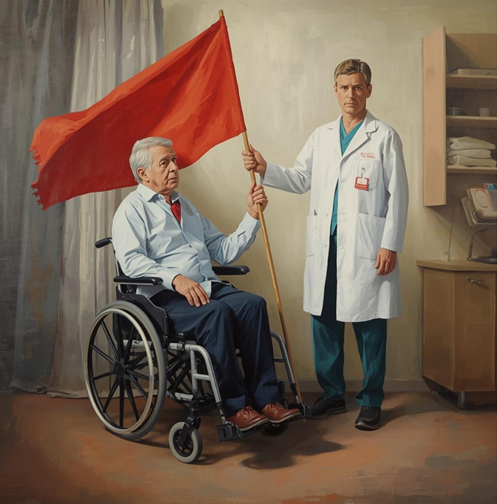
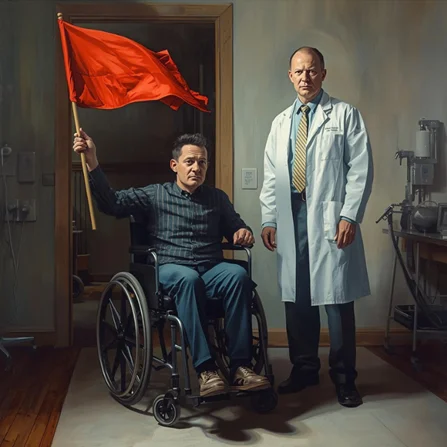
The Associated New Zealand Myalgic Encephalomyelitis Society (ANZMES) is marking World ME Day 2026 with a national call to action: Take ME Seriously. This year’s campaign focuses on improving early recognition of Myalgic Encephalomyelitis/Chronic Fatigue Syndrome (ME/CFS) in primary care through a new, evidence‑based Key Red Flags for GPs resource.

Thousands of New Zealanders live with ME/CFS — a serious, multisystem neuroimmune disease that profoundly affects mobility, cognition, autonomic function, and quality of life. Yet many remain undiagnosed or misdiagnosed for years, leading to preventable deterioration.

ANZMES President Fiona Charlton says the new clinical tool is designed to meet GPs where they are: “Most people with ME/CFS present first — and often only — in primary care. Early recognition is the difference between stabilisation and long‑term disability. Our Key Red Flags guide gives GPs the practical, real‑world indicators they need to identify ME/CFS early, recognise deterioration, and prevent iatrogenic harm.”


A practical, GP‑friendly tool for early detection

The Key Red Flags for GPs document distils the latest international evidence into a concise, one‑page clinical guide. It highlights the most important “dashboard lights” that signal ME/CFS in mild to moderate presentations — the group most commonly seen in general practice.

The resource focuses on:

  • Post‑Exertional Malaise (PEM) — the cardinal symptom of ME/CFS and the strongest diagnostic indicator.
  • Boom–bust cycling and shrinking functional capacity.
  • Orthostatic intolerance (OI) and POTS‑like symptoms, often mistaken for anxiety.
  • Talk Test failure — a simple in‑consult indicator of exertional intolerance.
  • Cognitive overload and sensory hypersensitivity, frequently subtle but clinically significant.
  • Early functional decline, which is preventable with timely pacing and stabilisation.

The guide also outlines immediate GP actions, including pacing education, orthostatic vitals, low‑stimulus consultations, and avoiding harmful recommendations such as graded exercise or “pushing through.”


A national call for safer, evidence‑based care

ANZMES’ 2026 campaign builds on its ongoing advocacy for improved recognition, updated clinical pathways, and alignment with global best practice. Previous ANZMES statements have highlighted the consequences of outdated treatment protocols, under‑recognition, and lack of specialist services in New Zealand.

“New Zealanders with ME/CFS deserve care that reflects the science,” Charlton says. “This resource is a step toward ensuring every GP in Aotearoa can recognise ME/CFS early, respond safely, and prevent avoidable decline.”


About World ME Day
World ME Day is a global initiative held annually on 12 May to raise awareness of ME/CFS and promote evidence‑based understanding of the disease. This year’s theme, Take ME Seriously, calls on clinicians, policymakers, and the public to recognise ME/CFS as the serious biomedical condition it is.


Access the Key Red Flags resource

The Key Red Flags for GPs document and full World ME Day 2026 campaign materials are available at:
anzmes.org.nz/world-me-day/take-me-seriously-2026

GPs at Frontline for Early Recognition

DecodeME Study explained

Every day in clinics across Aotearoa, general practitioners are the first — and often only — clinicians to see the early signs of Myalgic Encephalomyelitis/Chronic Fatigue Syndrome (ME/CFS). With recent Ministry of Health/Manatū Hauora and Open Medicine Foundation estimates suggesting that up to 185,000 New Zealanders may now be living with ME/CFS or Long COVID with ME‑like features, the scale of need is rapidly increasing. Most will present first to primary care. That places GPs in a uniquely powerful position: early recognition and early intervention can change the trajectory of this disease.

Why World ME Day Matters for Primary Care

World ME Day (12 May) highlights the importance of early recognition and harm‑prevention in general practice. ME/CFS is not rare, benign, or self‑limiting. It is a serious, multisystem neuroimmune disease that can lead to profound disability. Yet many patients remain undiagnosed for years — not because symptoms are invisible, but because they are misunderstood.

GPs can change that. Early recognition prevents harm, reduces deterioration, and helps patients stabilise before they fall into severe disease.


The DecodeME Study: What GPs Need to Know

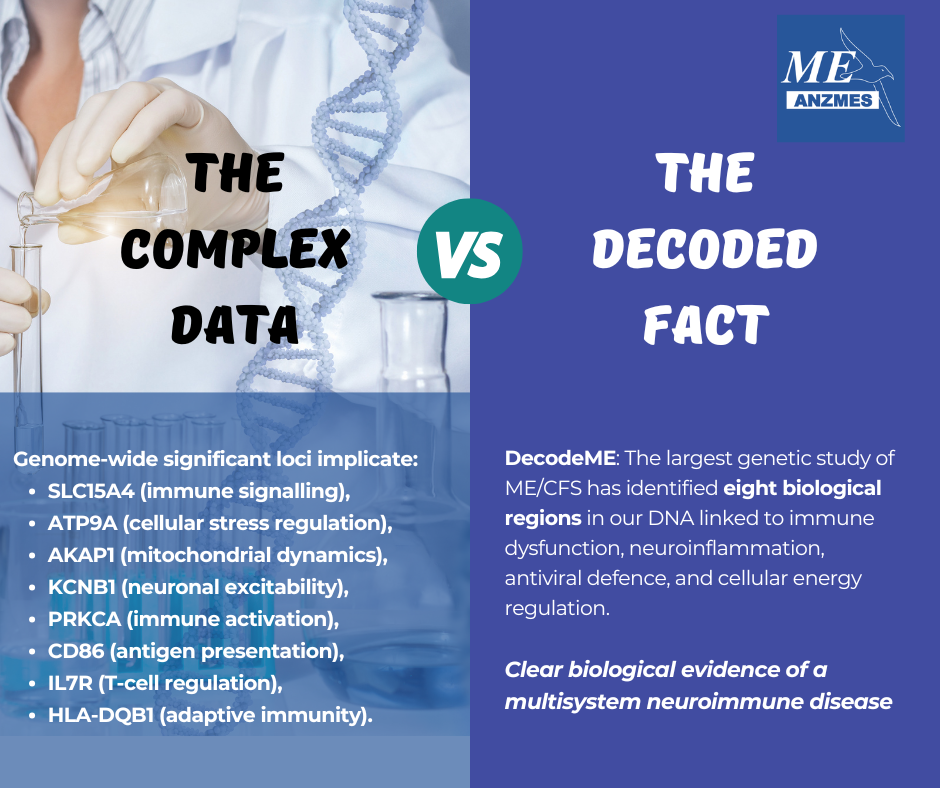
DecodeME is the largest genetic study of ME/CFS ever conducted, analysing the DNA of 15,579 people with ME/CFS and 259,909 controls. DecodeME looked at genetic variants in DNA sequence — the fixed letters of the genome. These do not change because someone becomes ill. Chronic illness can change gene expression, but it cannot change gene sequence. The findings provide clear biological evidence of a multisystem disease involving immune signalling, neuroinflammation, mitochondrial function, and antiviral defence.

What DecodeME Found — in Plain Language

Researchers identified eight genomic regions where people with ME/CFS differ from those without the illness. These regions include genes involved in:

  • Immune system regulation (SLC15A4, PRKCA, CD86, IL7R, HLA‑DQB1)
  • Mitochondrial (cell powerhouse) dynamics and cellular energy regulation (AKAP1, ATP9A)
  • Neuronal excitability and sensory processing (KCNB1)

In simple terms, these genes influence how the immune system switches on and off, how cells produce and manage energy, and how the nervous system processes signals.

DecodeME’s findings align with decades of biomedical research showing:

  • Immune dysregulation
  • Neuroinflammation
  • Autonomic dysfunction
  • Mitochondrial impairment
  • Abnormal sensory processing

These results directly contradict outdated, flawed theories suggesting ME/CFS is caused by psychological factors, deconditioning, or maladaptive beliefs. The genetic signals identified in DecodeME are differences in DNA sequence — fixed from birth and not altered or caused by chronic illness, lifestyle, stress, or personality. This means the study isnot ‘capturing a symptom’; it is identifying biological predispositions (the underlying in-build tendencies in the body) that you are born with. These differences help explain why some people develop ME/CFS after a trigger such as a viral infection or other environmental stressor — their immune and neurological systems respond differently when challenged.

DecodeME reinforces what patients and clinicians have long observed: ME/CFS is a real, physical, biological disease.


The Cardinal Feature: Post‑Exertional Malaise

The most important diagnostic anchor remains Post‑Exertional Malaise (PEM) — the delayed, disproportionate worsening of symptoms after physical, cognitive, emotional, or orthostatic exertion.

If a patient does not have PEM, they do not have ME/CFS.

PEM is not “tiredness after activity”; it is a pathological crash that can last days or weeks. Patients often describe it as:

  • “I can do things, but I pay for it later.”
  • “I can’t bounce back.”
  • “My body shuts down after I do things.”

Recognising PEM early allows GPs to guide patients toward safe activity management and avoid interventions that risk deterioration.


🚩Red Flags for GPs — When ME/CFS Should Be on Your Radar

GPs often see the earliest clues:

  • A viral or infectious trigger followed by persistent decline
  • Marked symptom worsening after even mild exertion
  • Crashes occurring 12–48 hours after activity
  • Cognitive overload or sensory intolerance
  • Orthostatic symptoms such as dizziness or tachycardia
  • Boom‑and‑bust cycling
  • Failure to recover to baseline after exertion

These are the patients who need careful pacing guidance, harm‑prevention strategies, and monitoring for deterioration.


Why Early Intervention Matters

Early recognition allows GPs to:

  • Prevent PEM episodes through pacing and activity stabilisation
  • Avoid harmful graded exercise or “return to normal” plans
  • Identify and manage orthostatic intolerance
  • Document functional decline early for workplace/school support
  • Prevent severity progression (mild ⇢ moderate ⇢ severe ⇢ very severe)
  • Validate a very real and debilitating disease

The GP’s response in the first months of illness often determines whether a patient stabilises or deteriorates.


Where GPs Can Access the Full Clinical Toolkit

Visit the ANZMES World ME Day page for diagnostic criteria, PEM recognition tools, management principles, pacing guidance, and access to the World ME Alliance medical education hub.

The World ME Day Red Flags Guide focuses on early recognition and harm‑prevention.

The Know M.E. Clinical Education Programme (CME/CPD accredited) provides practical in‑clinic tools, early stabilisation strategies, and multimorbidity identification. GPs can begin immediately through the Micro‑Learning Series, delivered straight to their inbox.

Closing Message

With increasing prevalence ME/CFS is a major public health issue — and one that sits squarely in the domain of primary care. This World ME Day, ANZMES invites GPs to explore the red flags, deepen clinical understanding, and join the movement to #TakeMESeriously.

Access the GP Red Flags Guide and full clinical resources at:
https://anzmes.org.nz/world-me-day/take-me-seriously-2026/

Press Release – ANZMES Launches National “Take ME Seriously” Campaign to Transform ME/CFS Clinical Care in Aotearoa

Release Date: 5th May 2026

The Associated New Zealand Myalgic Encephalomyelitis Society (ANZMES) is officially marking World ME Day on 12 May 2026 with a national call to action under the global theme “Take ME Seriously”. This year’s campaign is focused on bridging the significant gap between scientific discovery and clinical practice by providing New Zealand’s healthcare professionals with the evidence-based tools they need to recognise and manage Myalgic Encephalomyelitis/Chronic Fatigue Syndrome (ME/CFS) safely. With the recent release of breakthrough findings from the world’s largest DNA study, DecodeME, the biomedical reality of this condition is undeniable, yet many New Zealanders continue to face outdated treatment narratives that can lead to permanent clinical harm.

Leading up to World ME Day, ANZMES will launch new clinical resources and have conversations designed to help General Practitioners identify early warning signs such as Post-Exertional Malaise (PEM) and orthostatic intolerance. These resources are part of a wider push to promote the World ME Alliance’s Medical Education Hub, a global library of peer-reviewed materials that align local primary care with international best practices. ANZMES President Fiona Charlton emphasises that for too long, ME/CFS has been misidentified as a psychological or deconditioning issue, whereas the current science confirms it as a multisystem hardware failure involving immune dysregulation and mitochondrial dysfunction.

The campaign also highlights the “Know M.E. Clinical Education Programme,” a CME/CPD-accredited training series for hospital teams, nurses, and allied health professionals across Aotearoa. By providing these accredited modules, ANZMES is helping clinicians understand the “Energy Envelope” and the fundamental necessity of pacing as a primary management strategy. Distinguished experts, including Dr. Ros Vallings and Professor Warren Tate, have contributed to this educational push, underscoring that when clinicians are trained to understand the biological markers of the disease, the healthcare system moves from a state of uncertainty to preventing avoidable functional decline.

For the thousands of New Zealanders still waiting for a legitimate diagnosis, the 2026 campaign offers a message of hope and a formalised pathway to support. ANZMES is encouraging the public and the medical community to share these “decoded” facts to spread the science and challenge long-standing misconceptions that have historically hindered patient care. 

We ask that you please support and follow our 2026 campaign on ANZMES Facebook. over the next week. Sharing our content helps spread our message further and reach our health practitioners across Aotearoa. 

Detailed clinical resources, diagnostic criteria, and localised referral pathways are now available on the ANZMES website to ensure that every healthcare provider in Aotearoa is equipped to take ME seriously: World ME Day 2026 – ANZMES 

ANZMES: A #GlobalVoiceForME on World ME Day 2024

As we approach World ME Day on May 12th, 2024, ANZMES joins the global community in shedding light on the pressing issues surrounding Myalgic Encephalomyelitis (ME). This significant day coincides with the 55th anniversary since the World Health Organization (WHO) officially acknowledged ME in their International Classification of Diseases, underscoring the critical need to address this global health crisis.

In recent times, the landscape of ME has undergone a transformation, with COVID-19 emerging as the most common trigger for this chronic illness. The intersection of these two health challenges has resulted in a significant increase in the number of people affected by ME. Today, we estimate that at least 55 million individuals worldwide are living with the debilitating effects of this condition. Amidst these escalating numbers, ANZMES proudly stands alongside World ME Alliance members across the globe, collectively amplifying support for initiatives that seek to address the multifaceted impact of ME on individuals and communities alike.

No Cure, No Universal Treatment

One of the harsh realities we face is that there is currently no cure for ME, nor universally effective treatments. Individuals grappling with ME often endure not only the physical toll of the illness but also the stigmas that accompany it. It is imperative that we, as a global community, come together to address these gaps in understanding, research and treatment.

Building a #GlobalVoiceForME 

This World ME Day, ANZMES will be joining the call upon individuals, organizations, and countries to become a #GlobalVoiceForME. As a collective, we increase our power. By uniting our voices, we can influence the trajectory of ME research, treatment, and support.

ME knows no borders, and neither should our efforts to combat it. It is crucial that countries around the world work collaboratively to address this crisis. By fostering international cooperation, sharing research findings, and building recognition in every nation, we can pave the way to mitigate the devastating effects of ME.

Taking action for World ME Day 2024: In the coming months, ANZMES and the World ME Alliance will be announcing actions you can take to create change on May 12th, 2024. A big focus will be building relationships with health ministries of different nations, as they have the power to advocate with the World Health Organization. Your involvement will be vital to this effort, so keep your eyes peeled for more info coming soon.

Alongside this, we are developing tools for you to use, like our much-loved custom poster maker, a new film, graphics, posters, and more. We can’t wait to share these with you!

In the meantime:

  • Spread the Word: Use your social media platforms to share information about ME. Let your friends, family, and followers know that World ME Day 2024 is coming on May 12th, and that you’ll be asking them to join as a #GlobalVoiceForME!
  • Educate Yourself: Knowledge is a powerful tool. Learn about ME in your country through  ANZMES or reach out to others online to become part of the global ME community. Your voice matters, and you can contribute to breaking down misconceptions and stigmas surrounding the illness.

As we prepare for World ME Day 2024, we hope you will stand united with ourselves and the World ME Alliance, raising our voices to be heard around the globe. By growing the #GlobalVoiceForME, we can accelerate change, fostering a future where those affected by Myalgic Encephalomyelitis find hope, understanding, and ultimately, a cure. Together, let’s turn awareness into action and transform the landscape for individuals living with ME.

Malcare WordPress Security